

In one of our recent meetings at Brysa, we discussed how the whole hiring process has evolved. Our discussion hovered around how hiring decisions are no longer about whom to hire for a position. Rather, it is about “if hiring is needed at all”. The constant need for agility and workflow automation is largely driving this change.
In this article, we are going to take you through what we discussed, including what a typical team should look like and how to successfully hire AI agents. We will also touch upon when a human hire still makes sense today.
A modified version of this article appeared in the Business Partner Magazine.
A modified version of this article appeared in the Reboot Magazine.
A modified version of this article appeared in the Corporate Vision.
What a Typical Team Looks Like in 2026?
Take a look at this company’s org chart. What do you notice?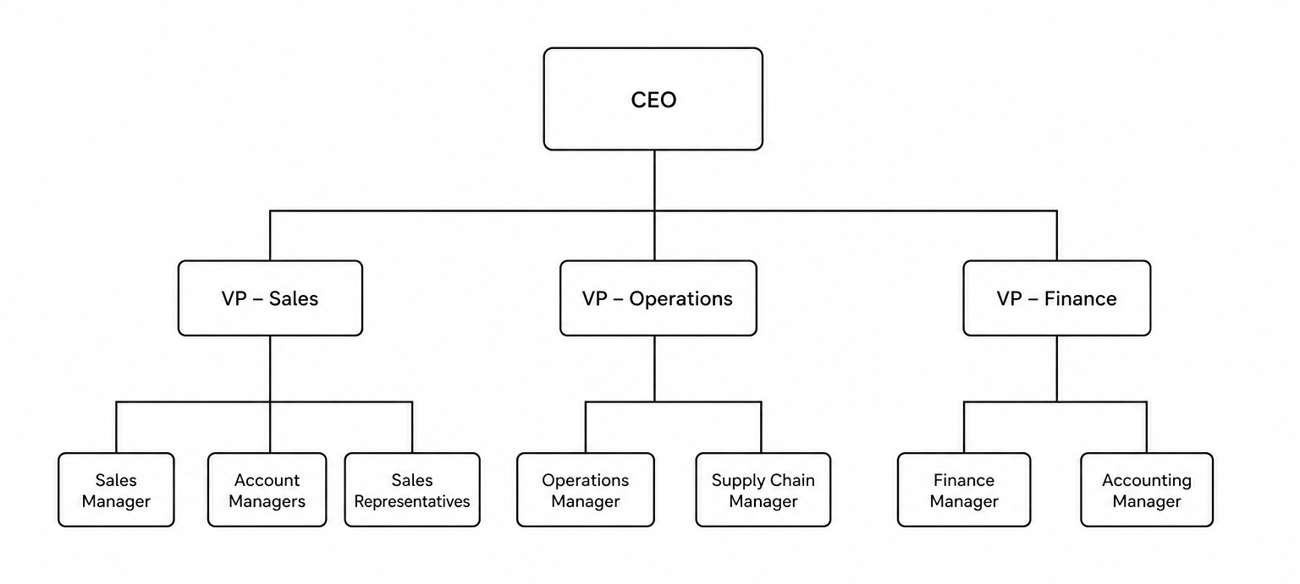
Humans with titles like “Sales Manager” and “Sales Representative”? This is expected. But what you don’t notice is a group of AI agents working in the background quietly without any titles. Some, solving tickets. Some, qualifying leads.
The company does not include them on the official headcount numbers. Obviously! Yet, they are a key part of the working engine. Because someone, somewhere got tired of paying a person to do work an agent could do equally well (And for a fraction of the cost!).
Now, don’t get us wrong. These companies are not running behind "automating everything they can lay their eyes on". They also don’t want to send off their entire workforce home. Rather, they have figured out the mystery of who goes where.
Satish Thiyagarajan, our founder, rightly quoted in our meeting: “Smart companies have figured out the art of split. They keep humans for the roles that need relationships and accountability. Agents, for the volume.”
A 2026 team isn't lean because AI is taking over the jobs. It’s because the people left are doing the parts of the job that actually needed that person in the first place.
Why the World is Switching Over to AI Agents For Many Tasks?
Cost. Cost. Cost. You know this. I know this. But is that the sole reason? Obviously not.
Speed is another pull. An agent doesn't wait for Monday to complete the tiny fraction of work left on Friday evening. A task in someone's queue (that took yonders to clear before) now just magically gets completed exactly at the moment it's needed.
Then there's consistency, of course. Take a human's output on a Friday afternoon. Measure it. It will not be the same as on Tuesday morning. Can’t blame them really. It's just how humans work. They have an off day once in a while. They miss a step in a task because of a tussle back home. For anything that needs to be right the same way every single time, that reliability is worth way more than the hourly rate of a human.
And maybe the least talked-about reason is that “agents don't cap out”. An employee can only take on so much before they burn out. You soon need to hire another one. Then wait for them to ramp up. An agent scales the moment you need it to. Ten tickets.Ten thousand. The process seldom changes.
Agentforce: Salesforce's Bet on the Agent-First Enterprise
Want proof that this shift isn't just a talking point? Look at what Salesforce has built around it. Yes, the all-powerful Agentforce AI is what we are talking about. It is capable of reasoning through and executing complex workflows without constant human input.
This isn't a chatbot in a different garb. It's a system of autonomous agents that is designed to handle business tasks across the entire customer lifecycle. It operates within Salesforce's own trust layer, understands requests and triggers actions on the platform.
That’s not even the interesting part. It is how Salesforce itself frames the goal. Their aim isn't to replace people. But to hand off the repetitive work so that humans can focus on judgement calls. And the humans overseeing these agents aren't doing it in a complex admin console. Slack has become the primary place where people and agents actually work together. It can act as an engagement layer for the entire Agentforce ecosystem.
It's also moving fast. Agentforce 360 went generally available following Dreamforce 2025. It brought together tools like:
- Agentforce Builder for faster agent development
- Agent Script for finer control
- Voice and context capabilities that ground agents in unstructured company data.
One thing is clear. One of the biggest software companies in the world just restructured its entire product line around the idea that agents are how work gets done next.
How to Implement an AI Agent Successfully?
Here are some simple steps you can follow:
Step 1: Define the role. Not the task list
Be very specific. “Handle order enquiries end to end for our top two channels, escalating anything involving a refund over £500”. This is ok. “Answer customer questions”. This is not. The scope should be super-tight. Only then does the agent perform. Also, it is easier to prove whether it worked.
Step 2: Set the scope of authority explicitly
Every hire has limits - things they must escalate. Agents need the same. This should be written down and enforced in the platform. Not in the prompt. This is where most governance failures begin. The boundary existed as an instruction instead of being a permission.
Step 3: Plan the onboarding. Because context is the whole job
A new starter spends weeks learning where information lives and which version is correct. An agent gets that in one step, from your data. It inherits every inconsistency in it. If the customer record is fragmented, the agent is confidently wrong from day one. This is why we keep insisting that AI starts with data rather than models.
Step 5: Name the manager
Somebody has to own the agent’s output and review its exceptions. They should have the authority to withdraw its permissions. An agent with no named owner is an unmonitored system with production access. This is a description most risk committees would recognise in another context.
Step 6: Decide how performance is reviewed
Agree the measures before launch - Resolution rate, escalation rate, accuracy, cost per outcome, and the human hours actually released. Then look at them monthly. Agents drift when the world around them changes. Drift is invisible unless someone is looking for it.
When Does a Traditional Hire Still Make Sense in 2026?
A traditional hire makes complete sense in certain situations. And for certain functions. We use a simple framework to sort this out: CROJ
Context
Some roles run on cumulative context. There is an unwritten history of why all the decisions got made the way they were made. Only a human will know who’s touchy about what topic in the office and why a client almost walked away last quarter. You can hand over the agent the required documentation. But it simply can't sit in on six months of meetings and pick up on the stuff nobody wrote down. If the job is mostly about that kind of institutional memory, keep the human.
Relationship
Some work depends on someone feeling like they're talking to the same person every time. For instance, a founder who wants one point of contact or a client who needs to trust the person on the other end of the email. This is less about capability and more about familiarity. And that's still a human thing in 2026. Agents are fantastic at consistency in output. But they're not yet a substitute for "I know this person, and they know me."
Ownership
There's always a difference between doing a task well and actually being accountable for an outcome. Someone whose job depends on the result brings a kind of stake in the game that's hard to replicate. They feel it when a launch flops or a deal falls through. Agents execute what they're asked to execute. They don't yet carry the weight of "this is on me." For roles that need that weight, hire a person.
Judjement
Answer this: how much of the role is making calls with incomplete or ambiguous information? More importantly, that decision should reflect how your company actually thinks. Agents are good at judgment inside a defined scope. But when ambiguity increases, it tilts back toward a human who's internalised your company's values well enough. The human can make the right call without a rulebook every time.
How Can Brysa Help?
Knowing you need agents is one thing. Getting them actually deployed and trusted by your team is another. That's where we come in. Our Salesforce Agentforce Quick Start Package takes you from discovery to a working agent in 3-4 weeks, not months. We map your workflows. We configure the agent logic through Agent Builder. And then set the guardrails so your agents know exactly where their authority ends and a human needs to step in.
We also run hands-on training for your team and come back 30 days after go-live to review performance and plan what's next. You don't need to figure out CROJ and agent implementation on your own. Talk to us, and we'll help you build a team (human and agent) that's actually built for how work gets done in 2026.